Your focus is not broken. Your day is fragmented.
In a German smartphone study, the median was 4 hours 5 minutes of use and about 58 device interactions a day. In the Android logs, the median was about 144 app episodes. Not one long session. Again and again. Those repeated switches are where a deliberate barrier can help.
58 interactions. 144 app episodes. A day in fragments.
Tóth and colleagues combined Android logs with donated iOS Screen Time data from 1,797 German adults. The median was about 58 device interactions a day. In the Android logs, users recorded about 144 app episodes and a typical unlocked session lasted about 6.4 minutes. The 144 figure applies specifically to the Android part of the study. It does not mean 144 proven work interruptions. It does show how often attention can be redistributed across a day.
Every switch carries context with it
General interruption research shows that the price of a switch is not just the moment you look at a display. Returning to the original task is delayed, unfinished context stays active in your mind, and work feels more demanding. There is no universal “ten to fifteen minutes per smartphone ping” figure. The robust core is simpler: repeated switches create measurable costs for attention and stress.
And it does not only cost time. People who are constantly interrupted often finish seemingly faster, but pay with more stress, more effort and the feeling of being torn.
Interrupted work gets done faster, but at a higher price: stress, frustration and pressure.
after Mark, Gudith and Klocke, 2008
Why half your head is still elsewhere
There is a name for it: attention residue. When you drop a task while it is still open, part of your attention stays attached to it while you are already doing something else. That is exactly why multitasking feels productive without being productive. A small trick helps surprisingly well: note where you were and what the next step is before switching, and your mind comes back faster.
Not the minute. The autopilot.
Your smartphone is not the enemy. What matters is whether you open an app deliberately or whether place, downtime and habit have already made the next move for you. Not every minute is equal. The practical lever lies in the repeated automatic routes back to the feed.
The good news: your focus comes back
Attention is not a one-way street. In a randomized experiment, people blocked all mobile internet on their smartphone for two weeks. 90.7 percent improved in at least one of three outcomes: subjective wellbeing, mental health or objectively measured sustained attention. This was a much more radical intervention than ctrl and not a product test. It shows that attention can change when automatic mobile access disappears.
Why a ritual can beat a resolution
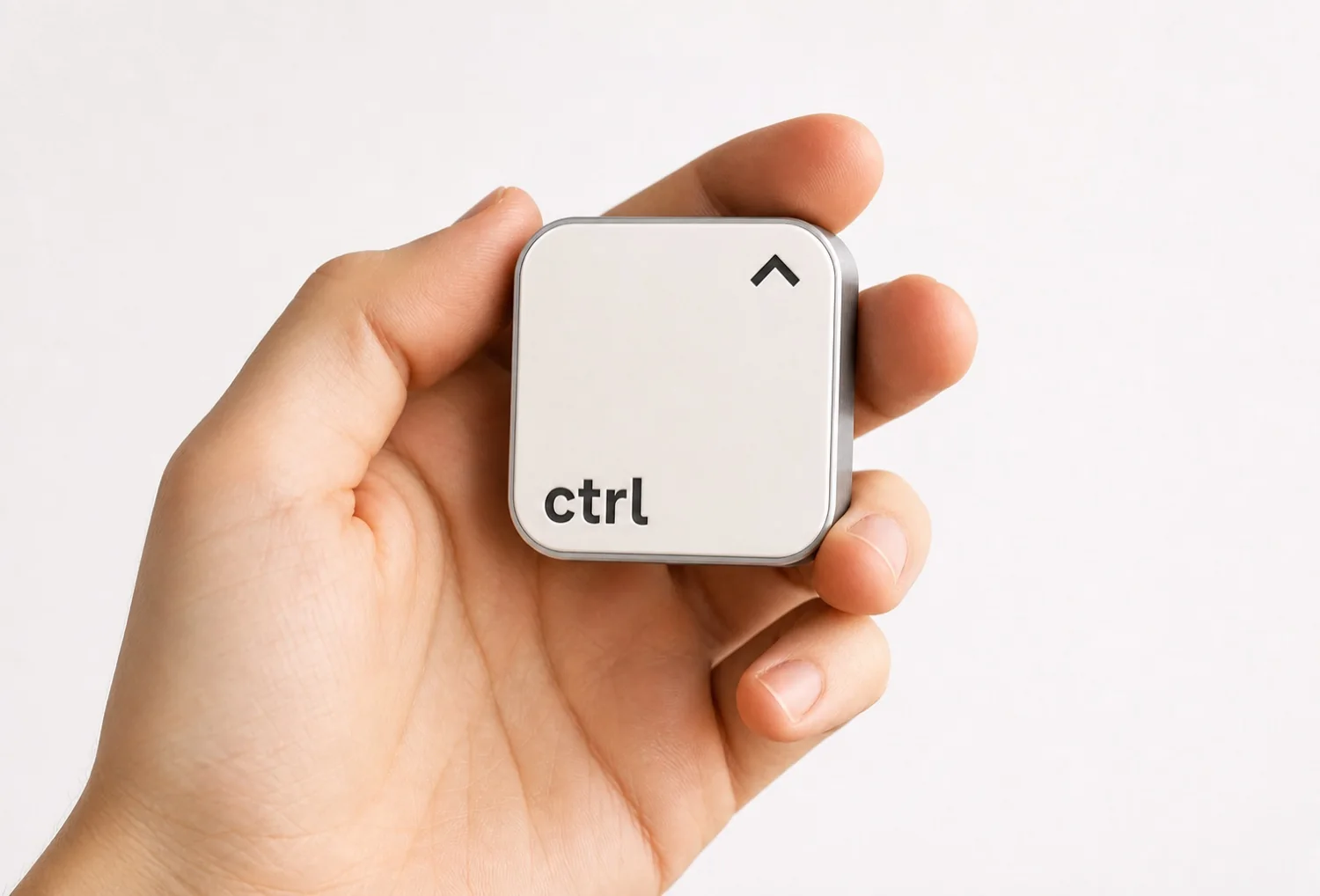
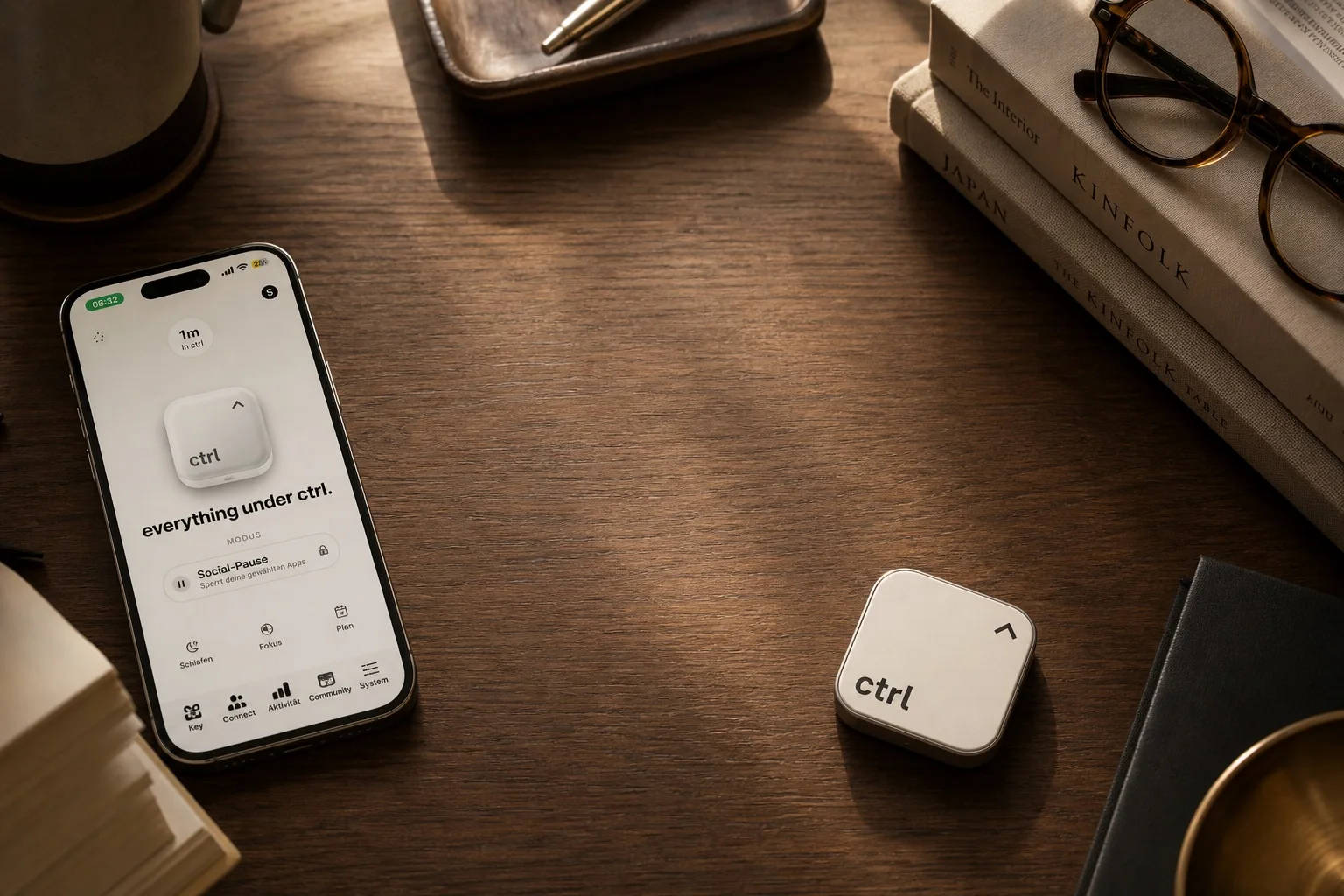
The idea behind the ctrl focus mode is to decide in advance which apps should wait, then make that decision visible through a physical action. That is a product principle, not a result borrowed from another intervention. Turn a reflex back into a decision.
Sources
- Tóth, Parry and Emmer, From Screen Time to Daily Rhythms, 2025, n = 1,797. doi.org
- Mark, Gudith and Klocke, The Cost of Interrupted Work, 2008. ics.uci.edu
- Leroy, attention residue when switching tasks, 2009. doi.org
- Castelo et al., blocking mobile internet, 2025. doi.org
- Grüning, Riedel and Lorenz-Spreen, non-randomized one sec field study with a self-selected cohort, 2023. doi.org